
Workplace burnout: symptoms, causes and how to prevent it!

By Matteo Faitanini
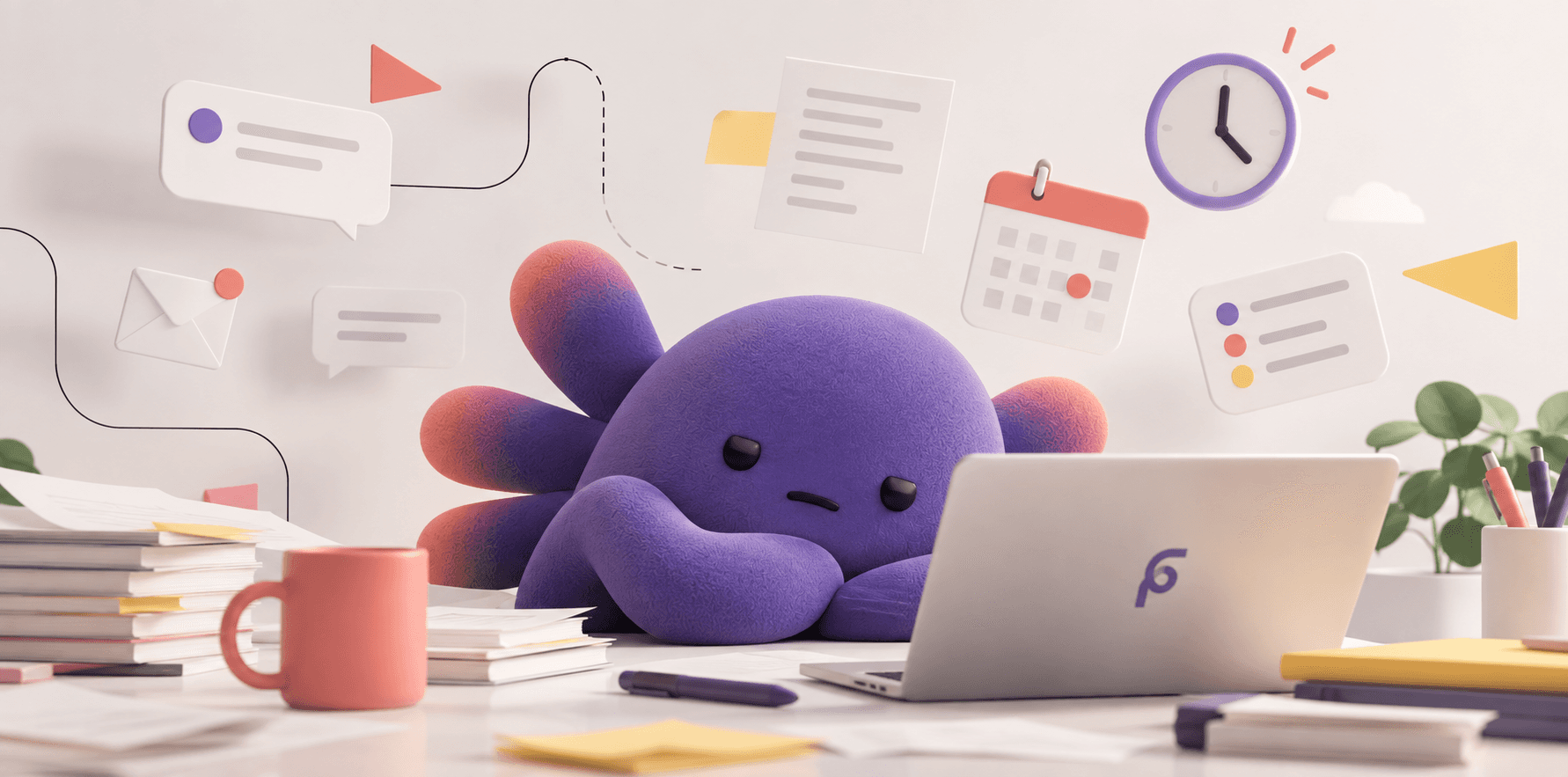
Workplace burnout is an occupational phenomenon that can be described as a syndrome caused by unmanaged chronic stress, recognized by the World Health Organization. Today, it affects 67% of workers and is not caused simply by working too much, but also by ineffective work organization. One way to prevent it is to design time and priorities better, rather than asking people to become more resilient.
We all know that person who is constantly working. The one who never switches off, replies to emails late at night and always seems to have another urgent deadline to meet.
Some of us may even recognize ourselves in that description.
Burnout does not feel like a serious problem until it affects you or someone close to you. You are good at what you do, you enjoy it, and you keep pushing. But constantly operating at your limit is not sustainable. One day, you wake up and realize that what looked like temporary stress has turned into deep exhaustion.
The reality is that 67% of workers - a figure that has been increasing since 2021 - report experiencing symptoms of burnout at work, while 44% say they feel burned out “often” or “always”. It is no longer an isolated issue. It is a widespread but often invisible problem that affects both mind and body. According to a Deloitte study, the figure rises to as much as 74% among workers under 31.
If this sounds familiar, or if you manage a team and see people gradually burning out, there is one thing to understand: burnout does not happen simply because we work too much. It often happens because we work badly.
What is workplace burnout and what are the symptoms?
Thinking we are invincible is the first mistake. Thinking that a weekend off will fix everything is the second.
The World Health Organization recognizes burnout as an occupational phenomenon, defining it as “a syndrome conceptualized as resulting from chronic workplace stress that has not been successfully managed.”
Burnout is a real mental and emotional collapse. It is the feeling of being completely drained. Energy disappears. Enthusiasm fades. Passion turns into apathy.
Today, burnout is particularly common in corporate and service environments characterized by:
- a culture of 24/7 availability and an inability to switch off, physically and, above all, mentally;
- tight deadlines, task overload and constant meetings;
- unrealistic expectations combined with insufficient resources and poor organization;
- lack of clarity and limited recognition of the value people create.
Emotional and physical exhaustion, depersonalization, cynicism, reduced personal accomplishment, chronic fatigue, cognitive overload and irritability toward colleagues and clients are all key signs of a deeper problem.
Burnout has become one of the consequences of a work system that, in many cases, is no longer sustainable.
How much does burnout cost companies?
When an employee or a leader reaches a state of burnout, the consequences for the company can be significant. Three examples help illustrate the cost of the problem.
- Turnover. A burned-out employee is 2.6 times more likely to look for another job. Turnover in exhausted teams can increase by up to 43%. Replacing a key employee can take months and cost six figures.
- Presenteeism. Presenteeism happens when someone shows up for work but operates at only around 60% of their capacity because they are depleted. Its cost can be up to ten times higher than absenteeism.
- Economic and quality losses. In the United States alone, disengagement and burnout cost an estimated $322 billion per year in lost productivity. In an average company of 200 people, this can translate into hundreds of thousands of dollars lost every year - between $200,000 and $600,000 -through quality issues, which may increase by 60%, as well as reduced innovation, creativity, initiative and effectiveness.
Another consequence is the impact on the future of the business. Customer satisfaction scores can fall by 12–18% in industries with high levels of burnout.
Work organization and burnout: what is the connection?
If every Monday means returning to a chaotic environment, the feeling of pressure and suffocation quickly comes back, even after a weekend that seemed restful.
Burnout becomes more likely when people lose control over their time and schedule.
- Unmanageable and disorganized workloads (32%). Overlapping priorities, constant emergencies and unclear responsibilities turn the working day into an obstacle course.
- Ambiguous expectations (30%). When people do not know what “good work” actually means, instructions are unclear and communication between teams is poorly structured, they often end up doing everything until they are exhausted.
- Endless meetings and notifications. Constantly switching between disconnected tasks, unnecessary micro-decisions and manual updates drains cognitive energy before meaningful work has even started.
- Unreasonable deadlines (27%). Constant time pressure is often the result of poor resource planning.
89% of workers simply want more time for themselves and a more sustainable way of working.
People are not asking for corporate meditation courses or superficial benefits. They want a daily work environment that does not drain them. They want better time management, fewer repetitive tasks and smoother project execution so they can perform at their best.
Every person works differently. Designing work around those differences can help people use their time and abilities more effectively.
How to reduce cognitive overload
Addressing burnout requires action on both sides of the organization: from employees and from leadership.
The first level is individual.
However simple it may sound, people need to learn to set boundaries. Switching off in the evening is not a sign of laziness or inefficiency. The brain needs time to disconnect in order to remain focused and creative.
Taking time away from work does not mean caring less about a project. It is an investment in maintaining performance over time.
The second level involves leadership.
People do not leave only stressful jobs. They also leave toxic and unpredictable environments.
One of a leader’s responsibilities should be to protect the team’s time and create the conditions in which people can do their best work.
How can companies achieve this?
Employee wellbeing should not only become a priority once a problem has already emerged. It can be designed into the way work is organized from the beginning.
- Transparency and clear priorities. Workloads should be visible and understandable to everyone. Knowing who is working on what helps prevent some people from becoming overloaded while others have spare capacity.
- Autonomy over time. Giving people more control over their working day can increase motivation and reduce stress. People often understand their own productivity patterns better than anyone else.
- Simplifying work with AI-native technology. Companies can no longer afford to waste time on unnecessarily complex processes. A modern Work Management system integrated with Artificial Intelligence can make a difference by:
- reducing information noise and unnecessary notifications, therefore lowering cognitive overload;
- automatically highlighting what is genuinely urgent and what can wait, helping protect uninterrupted periods of focus;
- helping managers identify early signs of team overload before they turn into a crisis;
- giving people back valuable time to focus on work that creates real value and a stronger sense of purpose.
How to reduce the risk of burnout by reorganizing work
How is the team doing today? How has it been doing this week?
It is worth stopping, listening to the signals and reorganizing time before reaching the point of no return.
76.8% of workers struggle to maintain a healthy balance between their personal and professional lives.
They are not asking for solutions that treat stress after it has already developed. They are asking for a way of organizing everyday work that avoids creating it in the first place.
Burnout is not prevented by asking employees to become more resilient. It is prevented by designing work in a smarter and more effective way.
Technology plays an important role in time management.
A modern Work Management system integrated with AI can help teams plan timelines more realistically and at scale. It can identify bottlenecks and signs of overload before they become serious problems. It can automate repetitive tasks and give valuable time back to people.
Most importantly, it can give managers a clear view of what is happening across the team, allowing them to intervene before stress becomes a crisis and helping each person work in conditions that better support their potential.
Retaining talent, protecting company productivity and supporting individual wellbeing require a change in approach.
Workplace wellbeing is not an optional benefit. It is a direct consequence of how everyday work and working time are organized.
FAQ
What is workplace burnout?
According to the World Health Organization, burnout is a syndrome resulting from chronic workplace stress that has not been successfully managed. It is classified as an occupational phenomenon, not as a medical condition, and is characterized by exhaustion, mental distance from one’s job and reduced professional effectiveness.
What are the main symptoms of burnout?
The main signs are emotional and physical exhaustion, cynicism or depersonalization toward work, reduced personal accomplishment, chronic fatigue, cognitive overload and irritability toward colleagues and clients.
How much does burnout cost companies?
Burnout can increase turnover by up to 43%, contribute to presenteeism — which can cost up to ten times more than absenteeism — and, in the United States alone, lead to an estimated $322 billion in lost productivity each year, according to the cited research.
How can Artificial Intelligence help prevent burnout?
An AI-powered Work Management system can reduce information overload, automatically identify real priorities, detect early signs of team overload and automate repetitive tasks, giving people back time and focus.
Sources
Gallup. (2026). State of the Global Workplace: 2026 Report. Gallup, Inc.
Highlights from the 2025 Work in America™ Survey:
https://www.apa.org/pubs/reports/work-in-america/2025
European Employment Services:
https://eures.europa.eu/are-you-brink-burnout-take-action-it-takes-over-2024-12-19_en
Deloitte’s 2025 Gen Z and Millennials Survey:
https://www.deloitte.com/global/en/about/press-room/deloitte-2025-gen-z-and-millennial-survey.html